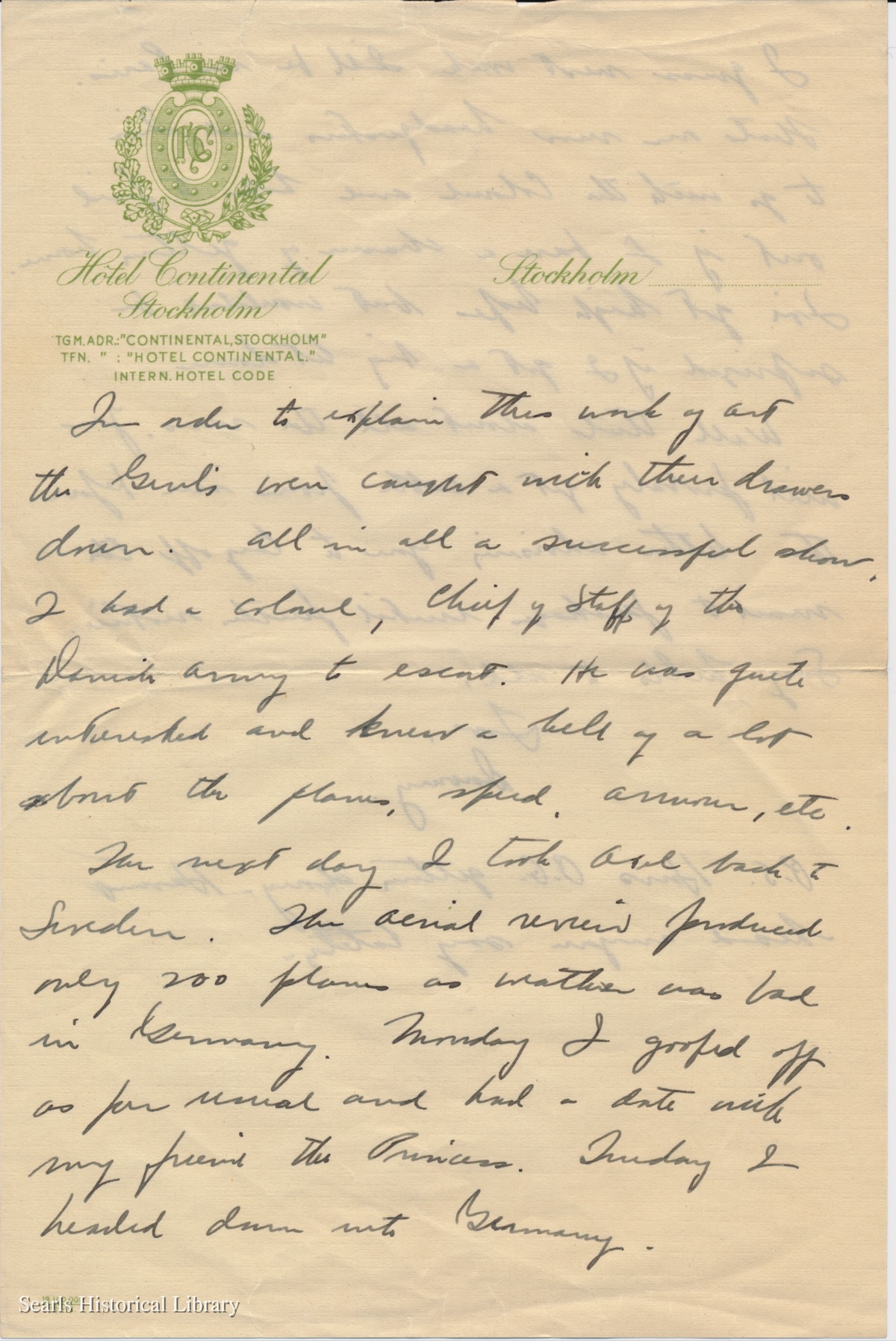
Example of an 1850s handwritten document
 ## The solution: Datalab as the handwriting intelligence layer
Dom found Datalab while searching for newer OCR models on Hugging Face. He integrated Datalab's Chandra model via API to convert scans of handwritten documents into structured HTML output with full layout understanding. He tested Chandra on a handful of court case pages, found the transcription to be very high quality, and started routing handwritten material through it.
> "I'm an expert at reading our 19th-century cursive, but I'm consistently surprised at the correct extraction of even badly handwritten letters. Many of my colleagues under 40 say, 'Dom, that's hieroglyphics.' This is lifechanging." — Dom Lindars, Archivist & Technology Lead, Nevada County Historical Archive
Their pipeline runs ingested images through Chandra to produce structured HTML transcripts, which feed PostgreSQL full-text search. The HTML preserves the structural details that are crucial for preserving the context of archival records, like table layouts in assessment ledgers. This allows the records to remain useful as documents beyond a stream of text.
Why Nevada County Historical Archive chose Datalab over alternatives:
- **Searchable handwriting transcription:** Datalab treats handwriting as a first-class input rather than degraded print. The Archive currently experiences ~90% accuracy on difficult 19th century cursive and 95-98% accuracy on cleaner handwriting.
- **Structure-aware output:** The HTML markup output preserves table structure, dollar amounts including cents, fractions, checkboxes, and underlines. For historical documents, structure is an essential part of the data, providing researchers the context they need to understand the documents.
- **Efficiency to address the backlog:** The Archive has processed 200K pages to date - a quarter of its 800K-page collection - in about a month. A 200-300 page handwritten court case that previously took Dom three weeks to transcribe by hand now finishes in 1-2 hours.
## The solution: Datalab as the handwriting intelligence layer
Dom found Datalab while searching for newer OCR models on Hugging Face. He integrated Datalab's Chandra model via API to convert scans of handwritten documents into structured HTML output with full layout understanding. He tested Chandra on a handful of court case pages, found the transcription to be very high quality, and started routing handwritten material through it.
> "I'm an expert at reading our 19th-century cursive, but I'm consistently surprised at the correct extraction of even badly handwritten letters. Many of my colleagues under 40 say, 'Dom, that's hieroglyphics.' This is lifechanging." — Dom Lindars, Archivist & Technology Lead, Nevada County Historical Archive
Their pipeline runs ingested images through Chandra to produce structured HTML transcripts, which feed PostgreSQL full-text search. The HTML preserves the structural details that are crucial for preserving the context of archival records, like table layouts in assessment ledgers. This allows the records to remain useful as documents beyond a stream of text.
Why Nevada County Historical Archive chose Datalab over alternatives:
- **Searchable handwriting transcription:** Datalab treats handwriting as a first-class input rather than degraded print. The Archive currently experiences ~90% accuracy on difficult 19th century cursive and 95-98% accuracy on cleaner handwriting.
- **Structure-aware output:** The HTML markup output preserves table structure, dollar amounts including cents, fractions, checkboxes, and underlines. For historical documents, structure is an essential part of the data, providing researchers the context they need to understand the documents.
- **Efficiency to address the backlog:** The Archive has processed 200K pages to date - a quarter of its 800K-page collection - in about a month. A 200-300 page handwritten court case that previously took Dom three weeks to transcribe by hand now finishes in 1-2 hours.
Handwritten court case with Datalab-transcribed output
 ## Impact
Beyond the time savings achieved, making these records searchable has enabled Dom and the Archive to unlock important pieces of history. The Archive receives many requests for volunteers to look up relatives or property records. For most people, it's the difference between driving to the county office and looking through hundreds of pages of old cursive, or typing in key words in the Archive's search bar. Every week, the Archive connects folks with long-lost ancestors and relatives based on the information in the scanned documents.
For example, Aaron A. Sargent, the former California senator and Nevada City resident who wrote the Pacific Railroad Act and drafted the language of the 19th Amendment, was known to be in the Nevada County records. With the records now being searchable, his name is findable in property sale records that previously sat in 80,000 pages of unsearchable microfilm.
## Looking forward
While the Archive has indexed about 200K pages to date, there are an additional 600K pages to process. With Datalab's upcoming release of word-level bounding boxes, the Archive will also extend the same keyword-highlight search to the 200K handwritten pages that now sit alongside them, which will make search highlighting more precise. Currently, searches return a paragraph-level hit, while this update will particularly hit home for users who are looking for exact names or terms on a page, like a relative or an address.
## Impact
Beyond the time savings achieved, making these records searchable has enabled Dom and the Archive to unlock important pieces of history. The Archive receives many requests for volunteers to look up relatives or property records. For most people, it's the difference between driving to the county office and looking through hundreds of pages of old cursive, or typing in key words in the Archive's search bar. Every week, the Archive connects folks with long-lost ancestors and relatives based on the information in the scanned documents.
For example, Aaron A. Sargent, the former California senator and Nevada City resident who wrote the Pacific Railroad Act and drafted the language of the 19th Amendment, was known to be in the Nevada County records. With the records now being searchable, his name is findable in property sale records that previously sat in 80,000 pages of unsearchable microfilm.
## Looking forward
While the Archive has indexed about 200K pages to date, there are an additional 600K pages to process. With Datalab's upcoming release of word-level bounding boxes, the Archive will also extend the same keyword-highlight search to the 200K handwritten pages that now sit alongside them, which will make search highlighting more precise. Currently, searches return a paragraph-level hit, while this update will particularly hit home for users who are looking for exact names or terms on a page, like a relative or an address.